

AI and Jobs: Which Careers Will Change by 2030?

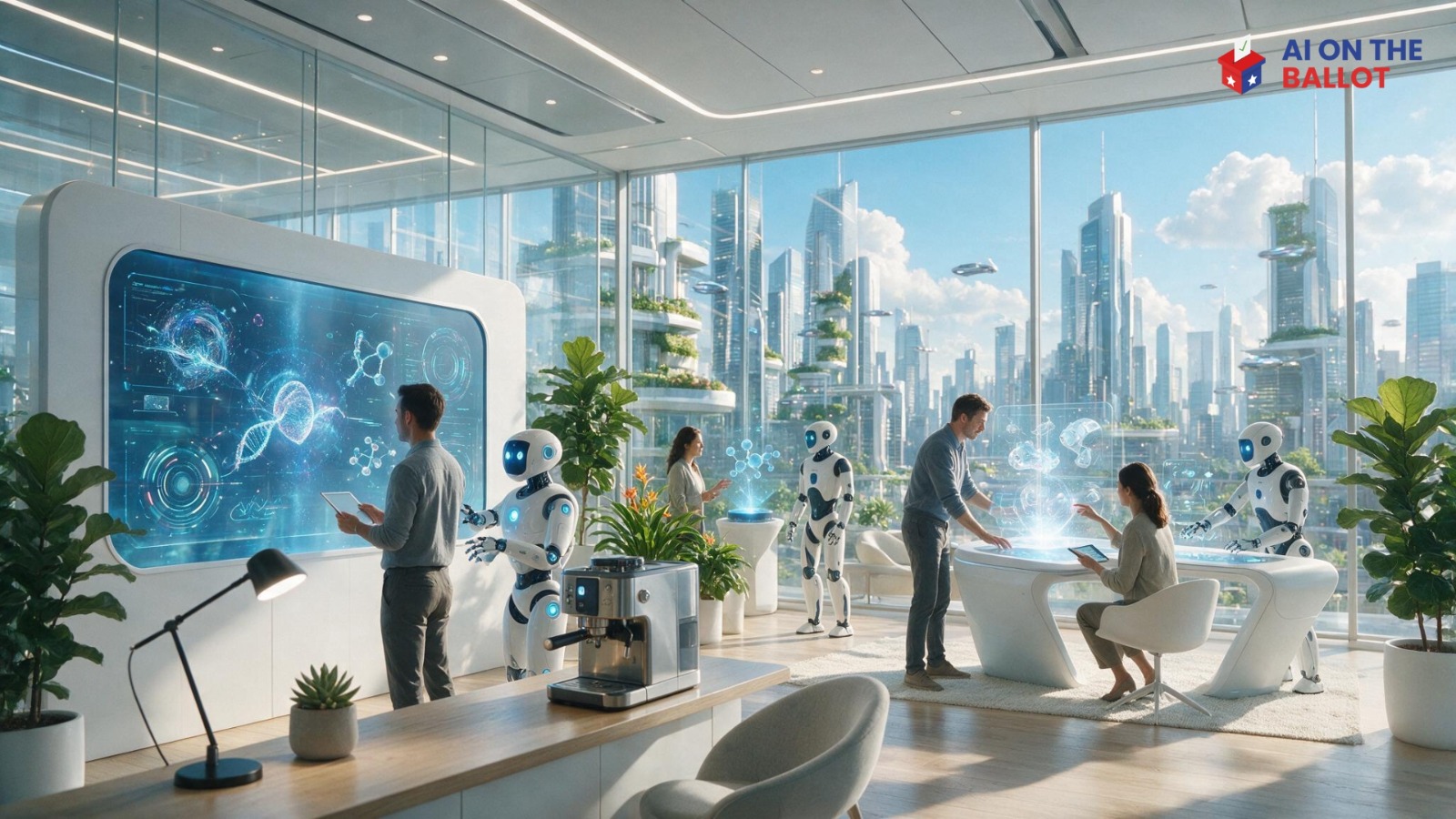
AI is quickly revolutionizing global workplaces and career paths. Millions of professionals are concerned about how changes in technology will affect their daily activities. Knowing the connection between AI and jobs is crucial for the career development process.
The progress of automation is much quicker nowadays compared to the previous industrial revolution periods. New technologies are reshaping commercial industries, impacting the recruitment process and the way companies assemble their team. Therefore, the future of work and AI policy demands proactivity on the part of all workers around the globe.
Industry leaders need to adapt their business in order to be successful. Workers have to analyze their existing skills in terms of new computational technologies. Such proactive people, who know about AI and jobs, will prosper in such an environment.
How AI Is Changing the Workforce
Current algorithms perform sophisticated mathematical computations and processing of data at an amazing pace. Automation replaces tedious routines and allows human professionals to engage in more strategic activities. This helps us to gain more knowledge regarding AI and jobs in various commercial industries.
Smart systems also create unprecedented productivity improvements across major corporate functions. Software tools draft business correspondence, analyze financial indicators, and debug lines of code. Therefore, the quantifiable effect of AI workforce impact in companies is producing more with fewer people.
Future workplaces would be dependent mainly on human-machine cooperation rather than on the replacement of jobs. Intelligent co-pilots help professionals through summarizing information, predicting future markets, and logistics organization. The modern worker should learn how to work with AI and job applications.
Jobs Most Likely to Be Affected by AI
There are professions that would undergo major changes because of their routine and predictable character. Exploring specific jobs affected by AI reveals how workplace roles must evolve soon.
Customer Service
Intelligent conversational agents now resolve routine customer inquiries around the clock. These systems process account lookups, order tracking, and simple troubleshooting without human delay. Human representatives now focus exclusively on emotionally sensitive complaints and complex escalations.
Administrative Roles
Automated scheduling tools and virtual assistants manage executive calendars and meeting logistics efficiently. Software platforms transcribe business meetings, organize action items, and route incoming digital communications automatically. Consequently, administrative staff must take on strategic project coordination tasks.
Data Entry
Manual typing and spreadsheet updates are quickly becoming obsolete practices across enterprises. Optical character recognition and machine learning algorithms ingest, organize, and validate records instantly. Therefore, data operators face declining demand as organizations automate standard documentation pipelines.
Marketing and Content
Generative platforms produce functional advertising copy, draft social media posts, and generate conceptual imagery. Writers and graphic designers must transition toward high-level brand strategy and editorial direction. These creative shifts highlight how varied jobs affected by AI have become.
Finance
Algorithmic engines scan financial ledgers to detect accounting errors and fraudulent payment attempts instantly. Basic auditing and routine bookkeeping duties require less manual oversight than in previous decades. Financial analysts must emphasize strategic portfolio guidance and complex advisory work.
New Careers Being Created by AI
While technology alters legacy positions, it simultaneously introduces exciting new professional roles. Modern enterprises actively recruit talent to build, monitor, and regulate smart machine platforms. The evolving future of work, AI, brings diverse employment pathways for ambitious specialists.
AI Trainers
Model trainers curate specialized training datasets, write system prompts, and evaluate algorithm outputs for accuracy. These professionals refine conversational behaviors and eliminate factual errors from large language models. Subject matter experts from diverse fields teach models how to reason accurately within niche domains.
AI Auditors
Technical auditors evaluate deployed enterprise algorithms for systemic bias, privacy breaches, and cybersecurity vulnerabilities. They ensure that corporate algorithms produce reliable results while safeguarding private consumer records. These independent reviewers protect companies against legal exposure and severe brand damage.
AI Policy Specialists
Regulatory advisors interpret evolving regional legislation and help corporations comply with legal mandates. They draft operational standards, monitor institutional compliance, and guide responsible technological deployments. These specialists serve as vital links between legal authorities and technical development teams.
AI Governance Professionals
Governance directors build comprehensive operational guardrails across entire corporate technology pipelines. They establish clear accountability frameworks and ensure algorithmic transparency across every departmental workflow. These executives protect organizational integrity while encouraging safe, continuous digital innovation.
AI Job Displacement vs Job Creation
Labor economists often argue about whether technological change either reduces or increases aggregate employment. The risk of mass AI job displacement is still the number one worry of all policymakers in the world. Nonetheless, past economic trends prove that technological advancement leads to an increase in aggregate labor demand eventually.
According to recent research on international labor issues, technology is set to automate millions of repetitive jobs. Meanwhile, innovative digital technologies create tens of millions of technical jobs around the world. Effective management of the global AI workforce impact needs appropriate safety nets and education.
Industry analysts predict that modern software will reshape daily tasks rather than eliminate entire professions. Most workers will use intelligent automation tools to complete their standard duties faster. Thus, strategic worker training minimizes structural AI job displacement while supporting sustained economic prosperity.
How Workers Can Prepare for 2030
Success in an automated economy demands dedication and skill development. Workers need to develop digital literacy skills in order to use modern machine learning techniques properly. Knowledge of how to control AI and jobs ensures that professionals can ensure their career longevity.
Step 1
First, commit to upskilling through acquiring relevant technical and workflow certifications. Gain knowledge of how to write good prompts and incorporate generative software into everyday practices. Digital literacy will enable you to turn computational challenges into productive multipliers.
Step 2
Secondly, enhance your uniquely human soft skills in order to stand out in the job market. Machines will never be able to replace true empathy, creativity, moral reasoning, or team management. Development of such interpersonal skills will ensure that you remain indispensable in your field.
Step 3
Lastly, develop a mindset based on the idea of continuous learning. Stay abreast of industry trends and test out the latest workplace technology. Continuous career growth will allow you to survive the next ten years of technological change in the workplace.
FAQs
Will AI replace jobs by 2030?
AI will automate particular repetitive jobs rather than replace whole professions entirely. Most employees will utilize intelligent software to enhance their productivity.
Which jobs are most at risk?
Occupations that entail repetitive, predictable activities will be at the greatest risk of being automated. They include data entry clerks, repetitive customer service representatives, and simple accountants.
What new jobs will AI create?
The market needs more AI trainers, algorithmic auditors, policy experts, and governance managers. There is an increasing demand for machine learning professionals and ethical compliance officers.
How can workers prepare for AI?
Employees must learn to master AI software and obtain relevant certifications. It is equally important for them to develop uniquely human traits such as creativity and emotional intelligence.
Is AI creating more jobs than it removes?
International economic forecasts predict the creation of a net surplus of jobs during the next ten years. The number of new jobs will surpass the number of obsolete occupations.
Which industries will see the biggest AI workforce impact?
Finance, healthcare, customer service, marketing, and software development will be the most impacted industries. Firms in these areas are using intelligent automation in their regular activities.